
Marine ich
Watch for: White spots, scratching, rapid breathing, hiding or reduced appetite.
First response: Confirm in a quarantine setting and seek a marine-safe treatment plan; do not medicate a display reef blindly.
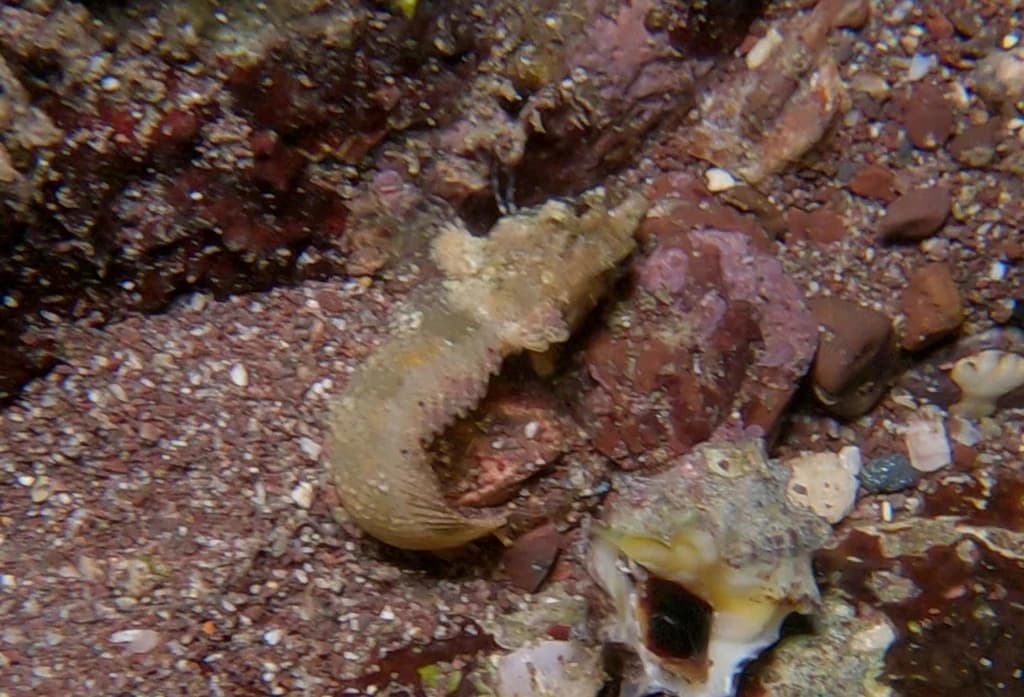
Paraclinus mexicanus
Mexican Blenny (Paraclinus mexicanus) is a saltwater fish associated with Eastern Pacific, with a recorded adult length of up to 4 cm. This source-backed catalogue profile brings its essential aquarium planning information together on one page.
Temperature
24–27°C
pH range
8.1–8.4
Minimum tank
60 litres
Typical lifespan
4 years
Diet
Omnivore
Origin
Eastern Pacific
Adult size
Up to 4 cm
Care level
Care level recorded in the source-backed catalogue profile.
Aquarium context
Present in the aquarium trade
Check it against your aquarium before purchase, then use the complete preparation checklist below.
Check compatibilitySpecies identity
Common name
Mexican Blenny
Scientific name
Paraclinus mexicanus
Family
Labrisomidae
Family group
Labrisomids
Water type
saltwater
Native range
Eastern Pacific
Social planning
Individual assessment
Conservation
Least concern (LC)
Aquarium setup
A mature marine aquarium with stable salinity, strong gas exchange and no detectable ammonia or nitrite. Measure salinity rather than estimating it.
Use 60 litres as the minimum planning baseline before allowing extra space for a group, tank mates, decor and swimming behaviour.
Hold temperature at 24–27°C and pH at 8.1–8.4; stability matters more than chasing a single number.
Design the aquarium around the recorded adult length of 4 cm, not the juvenile size seen at purchase.
Provide retreat areas and visual breaks while preserving enough unobstructed space for normal movement and feeding.
Filtration & waste
Lower individual waste load (0.2 index), but group size and total stocking still determine the filter capacity required.
Feeding
Use a varied omnivore staple with complementary plant and animal ingredients. Feed controlled portions and adjust to body condition and waste production.
Observe
Confirm every fish reaches food and swallows it.
Control
Stop before leftovers can decay in the aquarium.
Review
Track body condition, waste and feeding response over time.
Behaviour & tank mates
Treat temperament as an individual assessment. Observe feeding and territorial behaviour, and keep a safe separation plan available.
No simple community match is approved in this profile. Plan species-only housing or obtain a specialist compatibility assessment before adding tank mates.
Health watch
These are risks to monitor, not diagnoses. Test the aquarium first and seek an aquatic vet or experienced specialist for severe, fast-moving or uncertain symptoms.
Watch for: White spots, scratching, rapid breathing, hiding or reduced appetite.
First response: Confirm in a quarantine setting and seek a marine-safe treatment plan; do not medicate a display reef blindly.
Watch for: Hiding, faded colour, clamped fins, glass surfing, rapid breathing or appetite loss.
First response: Test water, review temperature and tank mates, reduce disturbance and correct problems gradually.
Before bringing one home
The established aquarium is at least 60 litres and matches the required saltwater system.
Temperature and pH overlap the full 24–27°C and 8.1–8.4 ranges.
A suitable omnivore food is available and the seller can demonstrate that the fish is feeding.
Ammonia and nitrite test at zero, acclimation is planned and a quarantine or observation option is ready.
Every proposed tank mate has been screened for adult size, behaviour, feeding competition and water compatibility.
Data & source notes
Catalogue source
FishBase · release 26.07
Species record
FishBase SpecCode 8324
Aquarium context
Present in the aquarium trade
Temperature basis
FishSnap tropical-marine planning baseline
pH basis
FishSnap marine planning baseline
Tank basis
FishSnap conservative planning baseline derived from adult size, water type, social ecology and family
Lifespan basis
FishSnap size/family planning estimate
Photo credit
Alberto Alcalá · CC BY
FishBase remains an editorial reference, but the useful species and care information is interpreted here so you do not have to leave FishSnap. Conservative planning baselines are labelled as guidance, not guarantees.